
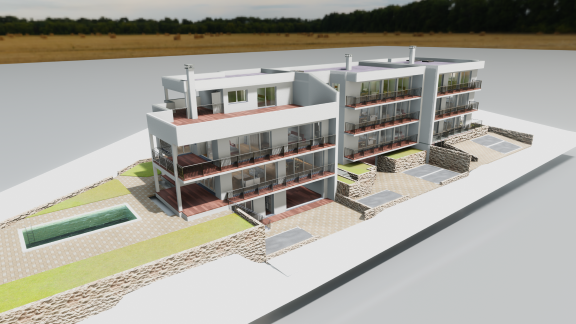

Architectural visualization development
Before the development of computer visualization techniques, architects relied on hand-drawn sketches, physical models, and other traditional methods to present their projects. In the 1950s, the development of the first 3D computer graphics laid the foundation for the use of computers in architectural visualization. By the 1960s, the first software for 3D computer-aided design (CAD) was developed, allowing the creation of digital models.
The 1970s brought the first hardware innovations for 3D computer graphics, resulting in more realistic visualizations. In the 1980s, computer techniques became more accessible, leading to the widespread use of computers in architectural visualization. The 1990s saw further advancements in software and hardware for 3D modeling, enabling the creation of more realistic and interactive visualizations.
In the 2000s, virtual reality (VR) and augmented reality (AR) began to be used in architectural visualization. Throughout this decade, the use of real-time rendering and other advanced visualization techniques became more common, resulting in highly detailed and realistic real-time visualizations. Today, architectural visualization is an integral part of the design process and continues to evolve with new technologies.
Photo by T. L. A. projekt d.o.o.
Ova web stranica koristi kolačiće kako bi poboljšala Vaše iskustvo. Pretpostavit ćemo da ste suglasni s ovime, ali možete se odjaviti ako želite. Saznajte više

