
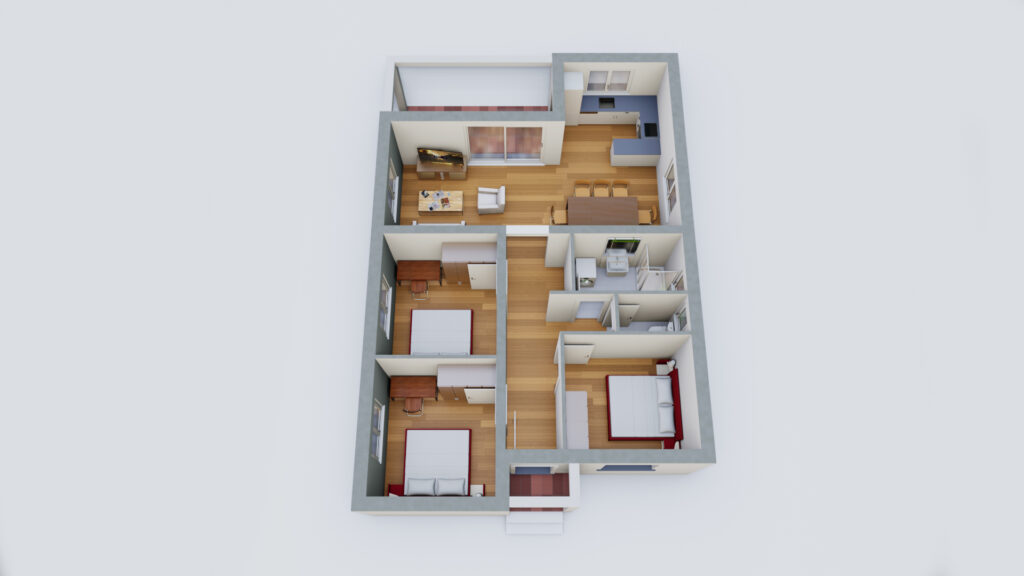
The common format for presenting the work done by an architectural firm is 2D, but with the introduction of 3D visualization, depth, colour, and appeal are added to these projects.
Some of the key aspects of using 3D visualization in architecture include:
- Insight into every aspect of the property: 3D visualization allows insight into every detail of the property before actual construction begins. This helps all stakeholders better understand the space and design.
- Identification and correction of errors: Through 3D visualization, potential errors or deficiencies in the design can be identified before construction starts. This saves time and resources that would otherwise be spent on corrections after construction.
- Marketing tool: 3D visualization serves as a powerful marketing tool. Presenting a project in an attractive way helps attract potential buyers and investors. Photorealistic renderings can create a strong impression and increase interest in the property.
Advantages of using 3D visualization in architecture include:
- Transparency in the concept: 3D visualization provides a transparent representation of the property design. This allows investors, buyers, and other stakeholders to have a clearer understanding of what the final product will look like.
- Error detection: Identifying potential issues before construction allows for quick corrections, resulting in time and resource savings.
- Cost-effectiveness: Early detection and resolution of problems through 3D visualization can prevent unnecessary costs that might arise during construction.
- An excellent marketing tool: Attractive visual representations can significantly enhance marketing strategies, attracting more attention and potential buyers.
Outcomes of using 3D visualization in architecture include:
- Saving time, money, and effort: Early detection and resolution of issues through 3D visualization lead to more efficient construction, reducing time and resource losses.
- Higher customer interest: Attractive 3D renderings can increase the interest of potential buyers, enhancing the chances of turning interest into actual purchases.
3D visualization is not just a marketing trick, but a powerful tool that brings real benefits to architectural design. Through transparency, pre-construction corrections, and marketing potential, 3D visualization has become an essential part of the modern approach to architectural planning.
Photo by T. L. A. projekt d.o.o.

